


When it comes to small churches, the challenge of creating an inviting and functional space can feel like trying to fit a hymn book into a pocket. However, with a sprinkle of creativity and a dash of inspiration, transforming a modest interior into a welcoming sanctuary is entirely possible. Imagine cozy nooks for prayer, vibrant colors that lift spirits, and seating arrangements that encourage community—all while keeping that divine charm intact.
Importance Of Interior Design In Small Churches
Interior design plays a crucial role in small churches, influencing the atmosphere and experience for congregants. Aesthetics directly impact worship, fostering a sense of peace and connection. Thoughtful design enhances functionality, making limited spaces feel larger and more inviting.
Creating cozy prayer nooks can encourage reflection and spiritual growth. Soft colors and natural lighting promote tranquility, fostering an environment conducive to prayer and meditation. Choosing the right seating arrangements helps build community, allowing for interaction while maintaining an intimate setting.
The layout must prioritize accessibility, ensuring everyone can navigate the space comfortably. Incorporating multifunctional furniture can optimize usage, serving various purposes throughout the week. Attention to details, such as artwork and decor, adds character without overwhelming the senses.
Emphasizing sustainability also benefits small churches. Utilizing eco-friendly materials not only helps the environment but reflects the values of stewardship. It reinforces a church’s mission, resonating with congregants who prioritize eco-conscious practices.
Artistic expressions, like murals or banners, can enhance spiritual engagement. Incorporating them into the interior design allows congregants to connect emotionally. Engaging local artists fosters community involvement, making the space feel inclusive and personalized.
Interior design in small churches shapes the overall worship experience. By focusing on comfort, accessibility, and community, these sacred spaces inspire congregants and affirm their faith.
Key Elements Of Small Church Interior Design
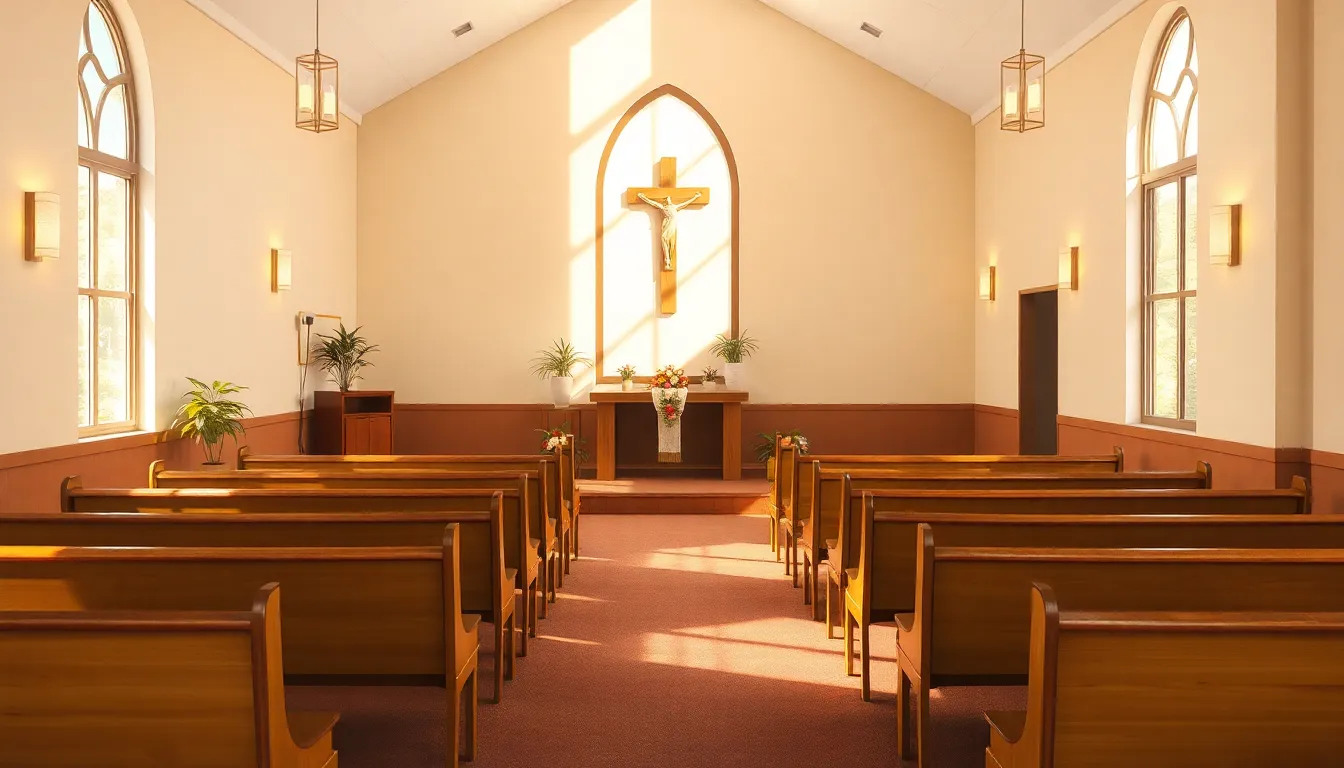
Small church interior design focuses on creating welcoming and functional spaces that resonate with congregants. Essential elements include color schemes, lighting options, and furniture arrangements that enhance the worship experience.
Color Schemes
Color schemes significantly impact the mood of a small church. Soft, neutral colors create a serene atmosphere while allowing natural light to flow. Vibrant accent colors can energize spaces and highlight key areas, such as prayer corners. Pastel shades in seating or wall decor promote tranquility, encouraging reflection. Cohesive color palettes unify the space, making it feel larger and more inviting. Combining warm hues fosters a sense of community, inviting congregants to engage with one another and the spiritual environment.
Lighting Options
Lighting options should enhance both function and atmosphere in small churches. Natural light from windows creates a warm ambiance and connects the indoors with the outdoors. Incorporating soft, diffused lighting from fixtures ensures comfort during worship. Layered lighting, such as recessed lights combined with chandeliers, adds depth and character while illuminating spaces effectively. Dimmable options allow for versatility during different services, accommodating varied moods and activities. Thoughtful placement of lights can emphasize artwork and architectural features, enriching the overall experience for congregants.
Furniture Arrangements
Furniture arrangements play a crucial role in maximizing space and fostering community. Flexible seating arrangements, like movable chairs or benches, enable reconfiguration for different gatherings. Grouping seating in circles or semi-circles facilitates interaction while promoting inclusivity. Multi-purpose furniture, such as tables that double as altar spaces, enhances functionality without cluttering the area. Ensuring clear pathways enhances accessibility, allowing everyone to navigate comfortably. Strategic placement of furniture encourages communal activities, fostering connections among congregants while maintaining a harmonious flow throughout the small church space.
Creative Small Church Interior Design Ideas
Small churches can transform their interiors into inviting spaces by embracing design creativity. Focus on practical and aesthetic choices to enhance worship experiences and community connections.
Multi-Purpose Spaces
Design spaces that function for various activities. Flexibility can turn a simple worship area into a gathering spot or educational venue. Furniture on wheels allows for easy reconfiguration, making room for events like bake sales or community meetings. Storage solutions integrated into designs hide unused items, maintaining a tidy atmosphere. Choosing durable materials ensures the environment sustains regular use and wear. Emphasizing accessibility makes these multipurpose areas welcoming for all congregants.
Incorporating Natural Elements
Utilize natural elements to create a serene ambiance. Indoor plants bring life into the space while improving air quality. Large windows encourage natural light, enhancing the warmth of the interior. Wooden accents, such as pews and beams, add warmth and texture, connecting the space to nature. Using stone features can evoke comfort and stability, further embedding spirituality into the design. Consider eco-friendly materials that reflect the church’s values and commitment to the environment.
Artistic Expressions
Bring artistic expressions into the church’s design for a deeper connection to worship. Murals and paintings can reflect spiritual themes, inspiring congregants during services. Displaying local artists’ work fosters community involvement and celebrates local talent. Incorporating sculptures or installations in common areas invites reflection and meditation. Choose pieces that resonate with the congregation’s message and values, reinforcing their beliefs through visual art. Prioritize dynamic displays that engage and inspire, transforming ordinary walls into impactful spiritual gateways.
Tips For Implementing Design Ideas
Implementing thoughtful design ideas transforms small church interiors into inviting spaces. Maintaining a clear vision with focused strategies enhances the overall experience for congregants.
Budgeting For Design
Allocating funds effectively requires planning and prioritization. Set a realistic budget that factors in materials, labor, and unexpected costs. Identify essential elements, such as furniture and lighting, and consider sourcing items through donations or community support. Using a phased approach allows the church to make gradual improvements without overwhelming finances. Regularly reviewing expenditures ensures adherence to the budget while enabling adjustments when necessary.
Seeking Professional Help
Engaging with professionals significantly elevates design quality. Look for local designers who specialize in small spaces, as they possess valuable insights into maximizing functionality. Consulting with interior design students can also be a cost-effective option that brings fresh ideas. Setting clear expectations and communicating specific needs fosters a collaborative environment. Considering volunteers from the congregation with design experience can further enhance the project’s effectiveness.
Transforming a small church’s interior into a welcoming sanctuary requires creativity and thoughtful design. By focusing on elements like color, lighting, and flexible furniture arrangements, churches can create inviting spaces that foster community and enhance worship experiences.
Incorporating natural elements and artistic expressions not only enriches the atmosphere but also deepens congregants’ connections to their faith. With careful planning and community involvement, small churches can achieve a harmonious balance of aesthetics and functionality. Ultimately, these design ideas can inspire congregants and affirm their beliefs, making every visit a meaningful experience.